
Bitesize Classics - from Catullus to Martial to David Bader

One of the highlights of my teaching week is ‘Arete’, our Classics Society for Sixth Form. We gather weekly to explore aspects of the classical world not covered by the exam specifications. Topics have ranged from a look at the highlights of the British Museum’s ‘Sunken Cities’ exhibition to studying Sophocles’ ‘Antigone’. One of my favourite ones this term has been ‘Bitesize Classics’, where we’ve looked at the shortest poems by Roman authors. I finished with the author David Bader, who presents a pithy and witty haiku for 100 books of world literature.
My favourite short Latin poem is Catullus 85:
odi et amo. quare id faciam, fortasse requiris.
nescio, sed fieri sentio et excrucior.
‘I hate and I love. Why do I do this, perhaps you ask?
I do not know, but I feel it happening and I am tortured.’
This presents Catullus’ conflicted feelings about his lover, Lesbia (more to come on Catullus and Lesbia in future posts). He loves her, but he knows that she has been unfaithful and that she will not marry him, despite her promises. He hates her and is tormented by this emotional and mental anguish.
A change in tone comes with Martial, whose poems take a more satirical tone. He wrote several books of epigrams - translated by A.S. Kline below. I teach these to Year 10 as their first taste of original Latin literature. The humour translates surprisingly well across 2000 years. These are my favourites:
1.32
I don’t love you, Sabidius, no, I can’t say why:
All I can say is this, that I don’t love you.
1.91
You don’t write poems, Laelius, you criticise
mine. Stop criticising me or write your own.
2.87
You say pretty girls burn with love for you, Sextus,
with your face too, like a man swimming underwater.
Epigrams continued in English poetry, too:
“What is an Epigram? A dwarfish whole, its body brevity, and wit its soul.”
Samuel Coleridge
“A cynic is a man who knows the price of everything and the value of nothing.”
Oscar Wilde
I came across this book in Wimbledon Village Bookshop at the start of my teaching career and have got a lot of mileage out of it.
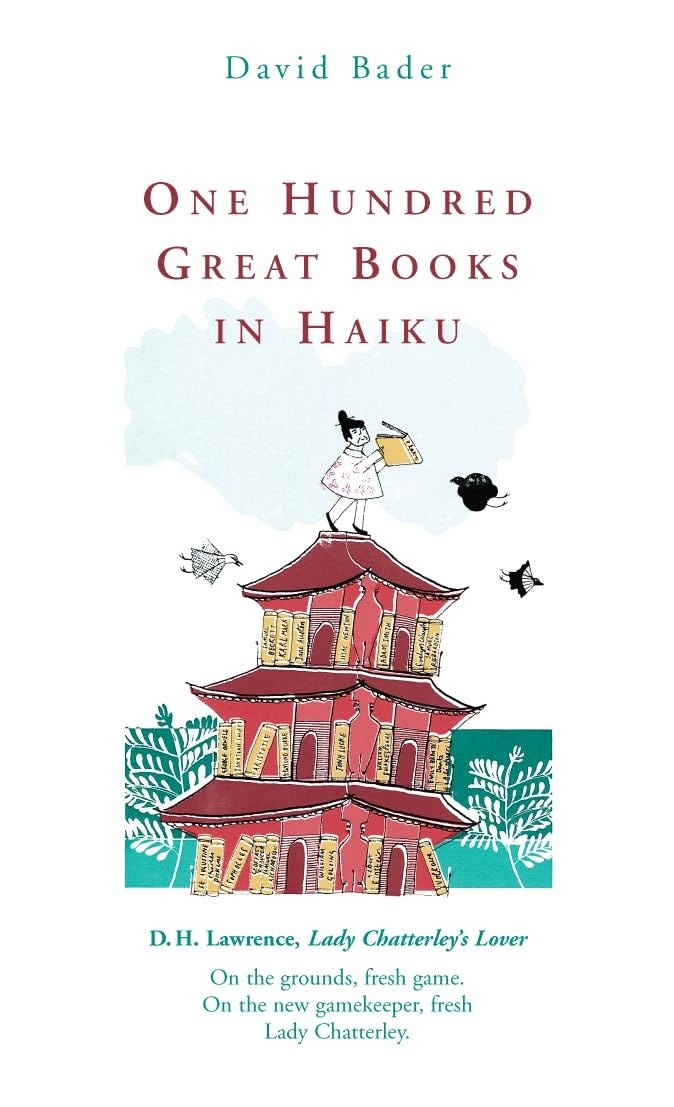
It is brilliant - my favourite classical haiku are:
Oedipus Rex: Sophocles
Chorus: Poor bastard.
Oedipus: This is awful!
Blind Seer: Told you so.
And Homer’s Odyssey:
Aegean forecast -
storms, chance of one-eyed giants,
delays expected
It’s an absolutely superb book - not in print, now sadly.
It even inspired me to write my own, based on Virgil’s Aeneid:
pius Aeneas
lost one wife, left another
and then stole a third.
(This prompted lots of discussion with my students about the final line - did Aeneas ‘steal’ Lavinia?)
I then challenge my students to write their own classically-inspired haikus - the thought process of Medea, Herakles on completing his final labour, Daedalus on conceiving his plan to fly away from Crete.
Please comment below if you have one to add!